
2025-12-29
The not-so-distant memory of hybrid power as an “innovation” in the engineering space has evolved into an energy solution that has found successful applications in the telecommunications space, in isolated power facilities, and in industrial power plants, to name a few. The fundamental premise of hybrid power lies in the combination of two or more power resources, including, but not limited to, renewables, energy storage, and fossil fuel-based power resources.
The appeal of hybrid power systems is more than their sustainability advantage. The actual benefit of hybrid power systems is in their ability to address uncertainty sources that are common in various situations: uncertainty in demand, uncertainty in the availability of the electric grid, uncertainty surrounding fuel prices, or other sustainability or environment-related issues. For situations where sustainability or sustainability cost is a consideration, hybrid power systems provide a balanced option.
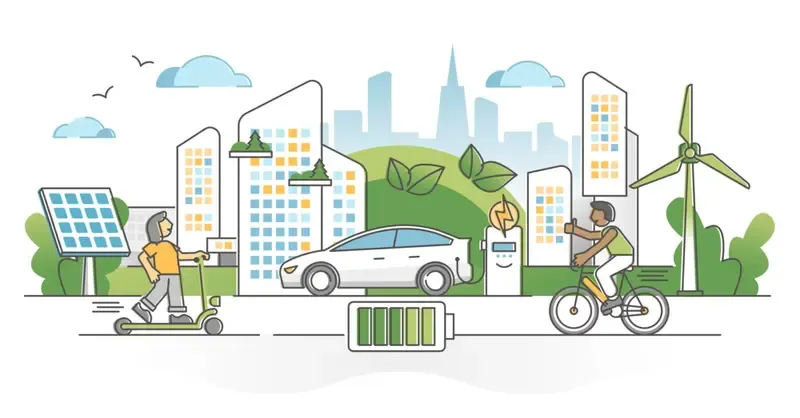
Renewable energy reliability is the main factor propelling the adoption of most hybrid power plants. The greatest weakness with standalone plants is the fact that they can be prone to failure when conditions change.
The disadvantage of relying on these sources as stand-alone power solutions is that they are susceptible to intermittent outputs due to factors like weather changes. The use of hybrid power sources helps mitigate this challenge by leveraging the strengths of different sources to meet the desired demand. Solar and wind sources provide power depending on the prevailing atmospheric conditions, while batteries provide short-term stability and backup sources provide power for low-intensity periods.
The study entitled Rural Electrification with PV Hybrid Systems, published by the International Energy Agency, indicates that hybrid systems improve greatly the reliability and continuity of energy delivery in off-grid or low-grid areas by managing solar power systems, energy storage solutions, and traditional sources of energy effectively.
What this boils down to is that there will be fewer interruptions of power supply, lower risks of operation, and higher confidence in the overall operation of the power systems.
The planning of energy costs can become more challenging with advancements in technologies where the main source of generation is fuel-based. This may also impact fuel sources due to fluctuations in expenditure.
Hybrid power solutions are what balance this equation. Base load demand is met by renewable sources. Plants are called upon only if need arises. Batteries mitigate the effects of short cycling and peaking. This means overall fuel use and the burden on particular equipment are diminished.
While there may be greater upfront engineering complexity with hybrid systems, the total cost over the lifecycle is more predictable. Over time, this is particularly important for remote or fuel-dependent sites.
When it comes to more efficient hybrid power systems, improvements are more about how the components with which more needs to be accomplished.
Rather than basing the running of the generators on uninterrupted outputs at inefficient partial loads, hybrid systems enable the running of each source near its optimal performance. Excess output is stored or smoothed, and the generators are run only in controlled environments.
It helps avoid energy wastages and ensures efficiency in the entire system without compromising the levels of reliability for the entire process. The benefits for the operators include increased efficiency with the current infrastructure without making concessions.
GHG emission reduction has become, or has become necessary, for most organizations, given government regulations, sustainability, and demands of various stakeholders.
United Nations publication Renewable energy: powering a safer future states that the integration of renewable resources into a power system leads to lower emissions of greenhouses gases, better air quality, and enhanced security of supply.
Hybrid power systems turn all these benefits into reality. They incorporate renewable sources within robust system designs to ensure that greenhouse gas emissions are reduced without being vulnerable to the risks associated with intermittency. This makes hybrid power systems even more ideal when environmental service needs to be ensured without affecting the generation aspect.
One of the most significant strengths offered by hybrid power solutions is the adaptability that they offer. The same model can be applied in completely different settings.
The base stations established by telecoms use hybrid systems that help them reduce consumption of diesel fuel while operating continuously. Industrial companies use them as stabilizers of the power supply in cases where the quality is erratic. Rural or island areas use hybrid power systems to avoid the cost of extending the main power supply to their locations.
Such flexibility is made possible by modularity. Capacity can be augmented, storage can be increased, and the share of renewables can be raised without needing to replace the whole arrangement. The hybrids power solutions adapt to demands rather than becoming outdated.
Being reliant on a single source of energy can cause danger. The concept of hybrid power helps overcome this risk by introducing storage as a buffer.
A certain level of integration with renewables is also beneficial for lowering dependence on fuel supply, prices, or the stability of the electrical network. For ground facilities located in remote or developing areas, such autonomy is the key to predictable performance.
Hybrid power moves the energy planning paradigm from a reactive trouble-shooting process to a proactive risk management approach.
Hybrid power systems, by nature, always look ahead and into the future. Organizations using hybrid power systems have the advantage of scaling their adoption of renewable energy without relinquishing control, whereas with micro
With advancing technology and/or changing regulations, the capacity of renewables can be expanded, the storage system can be upgraded, and logic in control can be refined. Such a step-by-step process prevents being locked into inflexible solutions.
Hybrid Power Solutions are not about either Renewable Energy or Conventional Energy. It is about leveraging each of them in their strongest areas.
Through enhanced reliability, cost management, increased efficiency, and the promotion of sustainability, hybrid power solutions are a pragmatic answer to the reality of various energy needs. For businesses requiring reliable power today and the foresight of offerings for the future, hybrid power solutions deliver a well-rounded base.
If you are considering alternative energy sources, begin by looking at your operational risks and costs. A hybrid energy system can resolve both issues in a way that traditional sources simply cannot.
How to Optimize Thermal Management in Solar Container
The Future of High-Density Storage: 5MWh+ in a Single 20ft Container
Second-Life EV Batteries in Solar Containers: Technical Challenges and Solutions
Corrosion Resistance 101: Why C5-M Coating is Essential for Offshore Solar Platforms
The Role of Smart Monitoring Systems in Extending Solar Container Lifespan