
2026-03-20
A solar container, or containerized solar system, or solar shipping container, is basically a portable power solution. A solar container is a collection of solar power, inverters, and battery banks installed in a container or a shipping container. These are usually deployed in off-grid or emergency situations.
So, just how much does a solar container cost? Well, the answer is a little complicated. A solar container can cost anything from $10,000 to over $150,000. But that is not a very detailed explanation. To understand the cost of a solar container in a detailed manner, we need to know the factors that influence it.
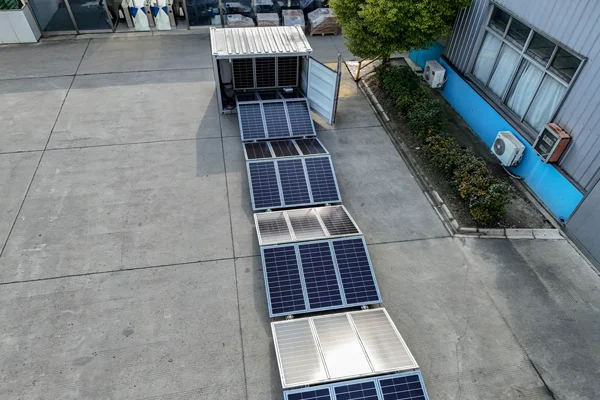
The cost of a solar container is not a fixed value.
The first and most obvious cost factor would be the power capacity of the system, which is measured in kilowatts (kW). A small capacity of 5 kW for a small application like lighting and device charging would differ significantly from a 50 kW capacity for powering a clinic or construction site.
The size of the panels would increase for a larger capacity, which would require stronger structures for mounting the panels and a larger capacity for the inverters.
Battery storage would likely be the costliest component for a containerized solar system. If the application requires the system to run 24/7 or at nighttime, then battery capacity would be required.
The study titled Off-Grid Solar Market Trends Report 2022, published by World Bank Group, shows that energy storage can account for a substantial share of total system cost in off-grid solar solutions, sometimes rivaling or exceeding the cost of the solar panels themselves.
This is why two solar containers, even if they have the same capacity for solar panels, can vary significantly in terms of cost—battery type makes all the difference.
Apart from solar panels and batteries, each solar container will have:
While they are necessary components of solar containers, they are often not considered in determining cost.
These parts are critical but often overlooked in cost analysis. Well-designed systems with remote monitoring or smart load management capabilities will, of course, be more expensive.
The “container” itself is not just a simple box. It can include:
More advanced containers, especially those that can be rapidly deployed without the need for trained personnel, will be more expensive but can save time and simplify the installation site.
Although the cost is subject to variation depending on the source and location, the market is generally divided into a few categories.
Entry-level solar containers for:
Typical Cost Range:
$10,000 - $30,000
Battery capacity is limited. These systems do not offer off-grid independence.
These systems are more versatile and are commonly used in:
Typical Cost Range:
$30,000 – $80,000
They often include meaningful battery storage and can support continuous operation with proper energy management.
Intended for demanding applications like:
Typical Cost Range:
$80,000 to $150,000+
These systems often include large battery banks, sophisticated controls, and strong engineering of the containers.
One might initially expect the cost range of these systems to be inconsistent. However, it is actually a reflection of the flexibility of these systems.
Unlike traditional rooftop solar systems, containerized solar systems are mostly customized. For example:
All impact the system design—and therefore its cost.
It’s interesting to note that solar containers can also save money in other areas. Because they are pre-assembled, they can reduce labor costs associated with installation.
The Renewable Energy Institute’s publication Analysis of Solar Power Generation Costs in Japan 2021 shows that installation and soft costs are a significant portion of total solar investment, which means pre-integrated systems like solar containers can offset some of these expenses through standardization and factory assembly.
While shipping a container is not a complex process, unlike moving loose solar equipment, costs are still influenced by:
In remote areas, logistics might not always be trivial.
Well, it depends on your specific use case.
If access to the grid is guaranteed and reliable, then traditional solar systems are probably more cost-effective. However, in deployable and off-grid applications, solar containers provide some compelling benefits:
While the cost of a solar container might not be trivial, downtime and labor costs might be significantly reduced.
The “average cost” of a solar container is less about a specific dollar amount and more about ensuring that your energy requirements match up well with your solar container’s capabilities.
To begin, determine your requirements for:
Then, proceed to obtain specific quotes for panels, batteries, and overall integration. This will help prevent “overpaying” for capacity that is not needed.
In most cases, buyers have found that knowing your usage requirements is more important than knowing your price. This is because a well-matched solar container will always prove to be more valuable than one that is cheaper but less well-suited to your requirements.
How to Optimize Thermal Management in Solar Container
The Future of High-Density Storage: 5MWh+ in a Single 20ft Container
Second-Life EV Batteries in Solar Containers: Technical Challenges and Solutions
Corrosion Resistance 101: Why C5-M Coating is Essential for Offshore Solar Platforms

The Role of Smart Monitoring Systems in Extending Solar Container Lifespan